
THE STORY BEHIND THE LABEL

adidas: how three stripes moved from sport to streetwear
From Adi Dassler’s 1949 beginnings to tracksuits and hip-hop: the adidas story, why we stock its preloved clothing, and how to choose a useful everyday piece.
Herzogenaurach, 1949: a shoemaker’s new beginning
Adolf “Adi” Dassler registered his adidas sports-shoe business on 18 August 1949 in Herzogenaurach, Germany. The company’s official timeline records 47 employees at the start and a shoe bearing its three stripes registered in the same year.
Dassler already had years of footwear experience. He and his brother had registered their earlier shoe-making business in 1924, after beginnings in their mother’s laundry room. That earlier venture is part of the background; 1949 is the founding date of adidas itself.
Sport gave the new business its purpose and its public stage. The company’s archive identifies West Germany’s 1954 World Cup victory, with the team wearing lightweight adidas boots with screw-in studs, as a major moment in its rise. The clothing that many shoppers associate with adidas would come later.
The tracksuit takes the stripes beyond shoes
In the mid-1960s, adidas had footwear expertise but lacked its own clothing-production capacity. Its tracksuit history describes Adi Dassler working with textile manufacturer Georg Schwahn on a lighter warm-up suit. Production began in 1966, followed by the first models in 1967.
A tracksuit named after footballer Franz Beckenbauer helped bring the range to wider attention. The archive says the West German national football team wore matching adidas tracksuits for training and warm-ups by 1969. Meanwhile, Horst Dassler was marketing sportswear to families in France as comfortable leisure clothing.
That shift matters to the clothes we sell today: a zip top or pair of track trousers can have a sporting background and still be chosen for ordinary daily wear. The historical designs do not establish the fabric or performance features of a later preloved piece.
The Trefoil, music and a wider cultural identity
The Trefoil logo arrived in 1972. adidas’s 2025 annual report places it within a longer timeline that includes Run-D.M.C.’s 1986 song “My Adidas”, a key example of the basketball-born Superstar shoe becoming part of streetwear culture.
The same report dates a dedicated lifestyle segment focused on sports-inspired streetwear to 2001. It describes adidas Originals as drawing on sporting memories and archive designs, with the Trefoil as its identifying symbol. Those developments help explain why shoppers encounter both sports-focused clothing and pieces chosen primarily for style.
These are documented examples of cultural reach, rather than an independent popularity ranking. Our editorial view is that adidas remains easy to recognise because a few details do so much: three stripes along a sleeve, a small chest emblem or a familiar track-top shape can give an otherwise simple outfit character.
Why we stock preloved adidas
Our catalogue includes charcoal Trefoil joggers, tapered training trousers, a three-stripe zip hoodie, track jackets and a crew-neck sweatshirt. That range gives shoppers several practical wardrobe options, from an extra casual layer to trousers for relaxed everyday outfits. The live listings, rather than this article, determine what is available now.
We would wear a navy track jacket over a plain T-shirt with jeans, or use a black zip hoodie as a layer that can be opened or removed as the day warms up. Charcoal joggers work with a simple sweatshirt; a small-logo crew neck offers a quieter alternative to prominent stripes. These are our styling suggestions, not claims that every garment suits every activity.
For us, preloved value comes from the individual piece: its asking price, fit, condition and how often you expect to use it. We do not attach a guaranteed saving to the brand name. A garment that fills a real gap in your wardrobe can be a better choice than a more eye-catching piece you rarely wear.
Choosing the right piece: fit, labels and wear
Start with measurements, especially when a listing gives a number such as 36 without a verified UK conversion. Compare chest width, body length and sleeve length with a comfortable hoodie or jacket you own. For trousers, compare waist, rise and inside leg where recorded, and ask for any missing measurement before ordering.
Check the actual-item photographs around cuffs, pocket edges, knees and hems. Look at the zip and drawcords, and read any notes about marks, surface wear or stretched fabric. Compare similar garment types: a lightweight training trouser can feel very different from a thicker casual jogger.
Read the individual fibre and care labels where available. The logo alone does not establish breathability, warmth, waterproofing or a manufacturing date. Likewise, a Trefoil does not prove that a piece was made in the 1970s; later designs also use it.
Use the adidas and adidas Originals topic links to explore the catalogue, or visit the full shop below. The photographs and product links in this article are selected through current availability checks, so the selection can change as one-off garments sell.
Explore preloved adidas
One-off clothing, actual-item photographs and individual condition details. Check each listing for current availability.
Shop preloved adidas ↗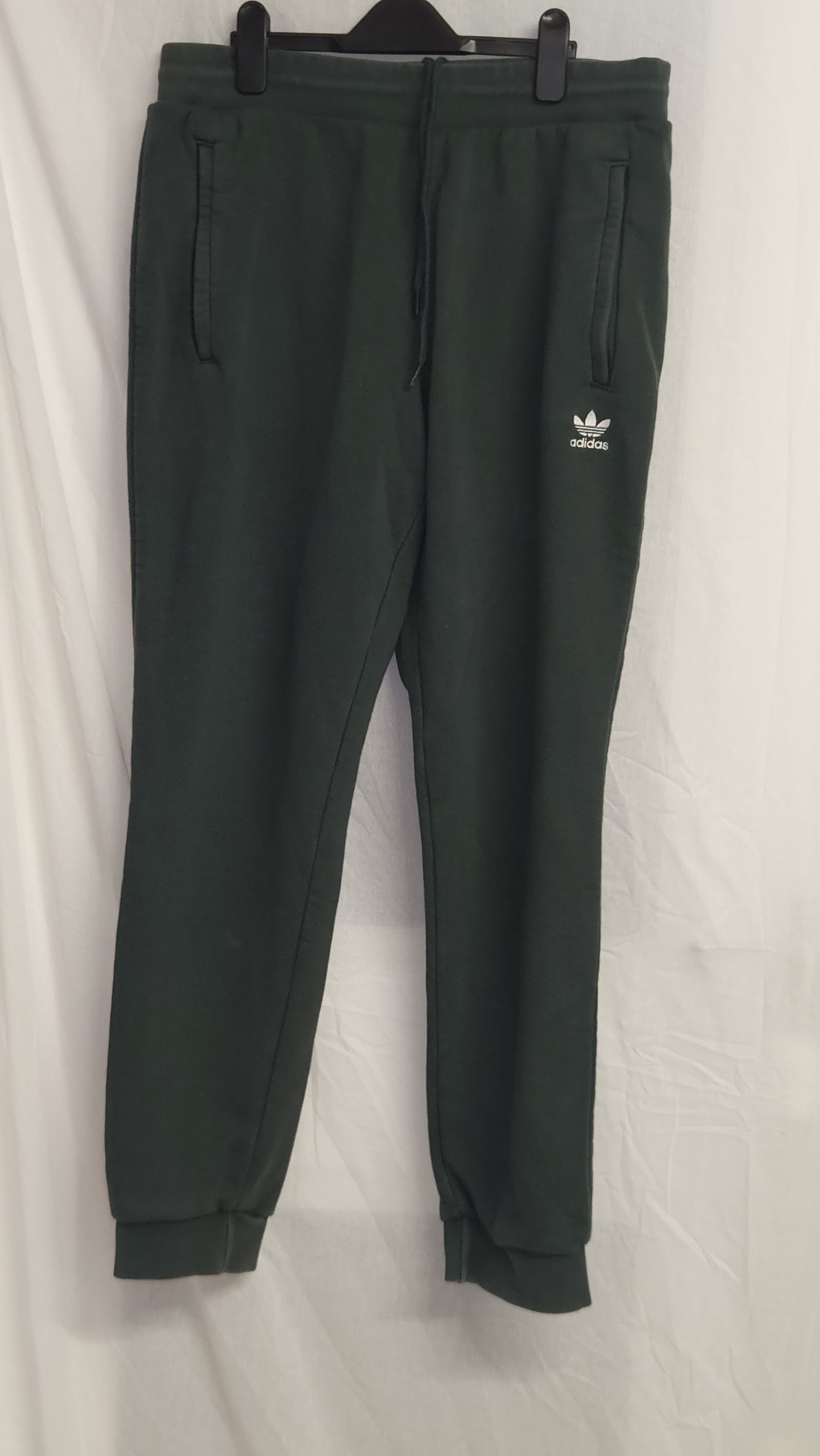 Charcoal Trefoil Joggers
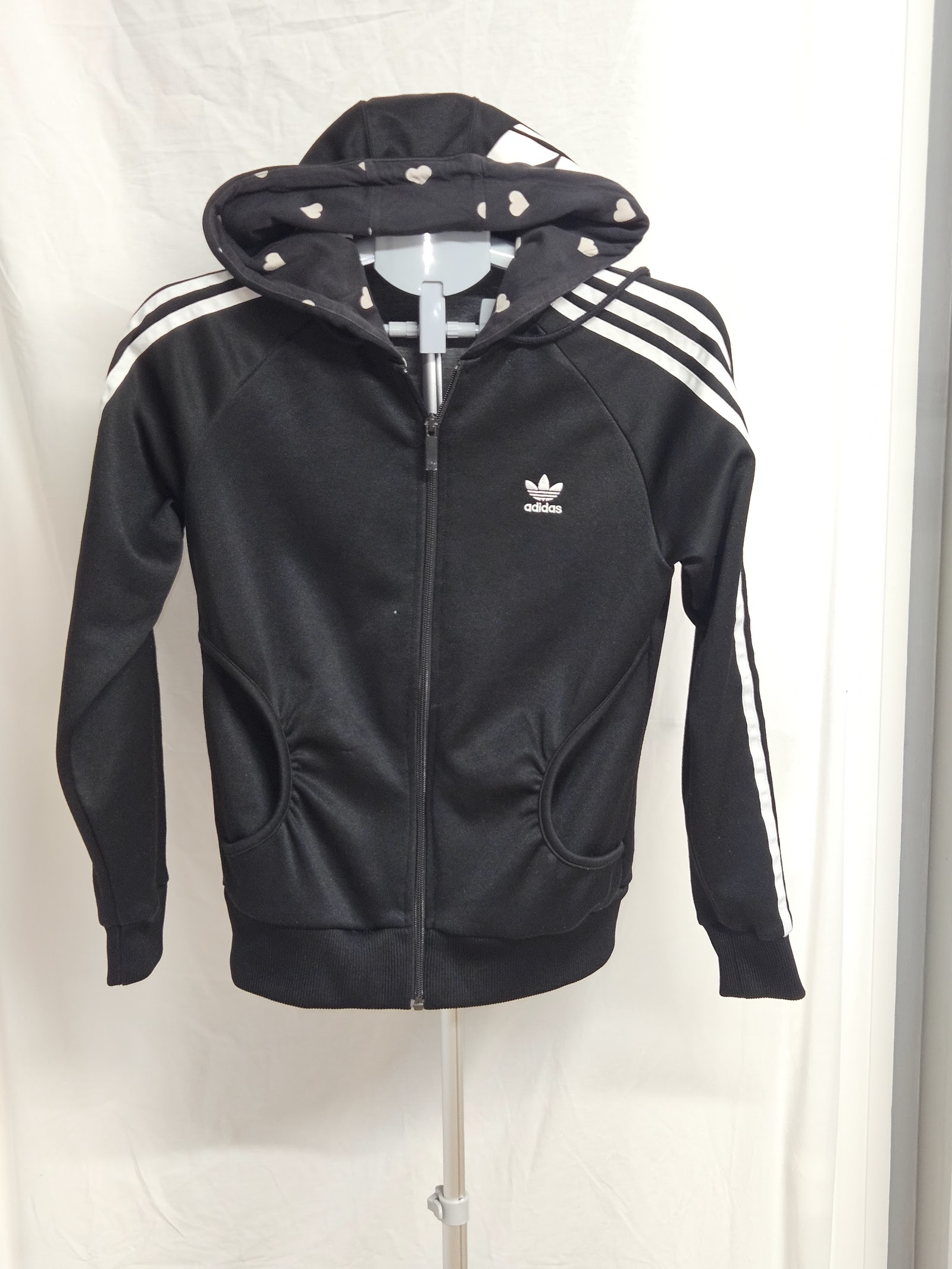 Black White Three Stripe Full-Zip Hoodie
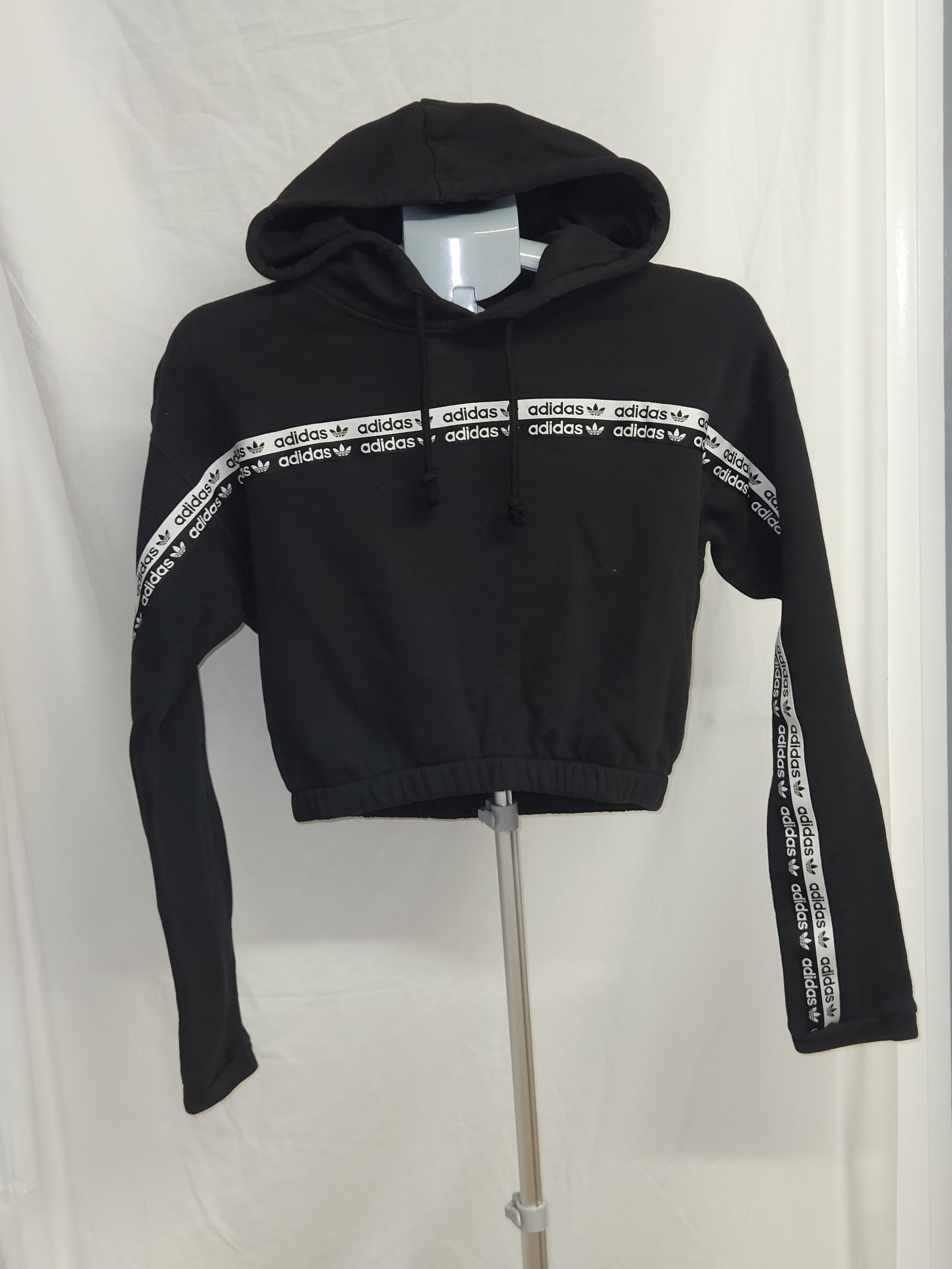 Black Trefoil Tape Cropped Pullover Hoodie
History sources
Historical details checked against the sources linked below. Our styling views and stocking reasons are our own.