
THE STORY BEHIND THE LABEL
Columbia: from a Portland hat company to adaptable outdoor layers
How the Lamfrom and Boyle family built Columbia from a small 1938 hat business, why adaptable jackets became important, and what we value in preloved outdoor clothing.
Portland, 1938: a family starting again
Columbia’s story begins with Paul and Marie Lamfrom and their family, who fled Nazi Germany and settled in Portland, Oregon. The company’s UK history says they bought a small hat manufacturer in 1938 and named it Columbia Hat Company after the Columbia River. Its newer US account places their arrival in 1937 and says Paul established the business with a small loan.
Their daughter Gertrude “Gert” Lamfrom, later Gert Boyle, was 13 when the family left Germany. The Lamfroms had worked in clothing before emigrating, but in Portland they had to rebuild from the beginning. The business started with hats rather than the jackets and outdoor clothing for which Columbia later became known.
Columbia Sportswear Company’s 2025 annual filing describes the firm’s origin more narrowly as a small, family-owned regional hat distributor founded in Portland in 1938. Taken together, the company sources support 1938 as the founding year and the Lamfrom family as its founders, while showing how the business itself has told the early story in slightly different terms.
From hats to fishing vests and outdoor clothing
The official timeline identifies 1960 as a key change: Gert designed the company’s first fishing vest and Columbia Hat Company became Columbia Sportswear Company. Her husband, Neal Boyle, took over the family business and expanded it beyond hats into outdoor clothing.
When Neal died suddenly in 1970, Gert took charge. Columbia’s announcement following her death in 2019 records the many roles she held, from sewing the first fishing vest to serving as president and becoming the company’s advertising face. Her son Tim Boyle subsequently became central to product development and leadership.
This history helps explain why Columbia’s identity combines family-business storytelling with practical outdoor design. It does not establish the age or technical specification of an individual second-hand garment: those details still have to come from its labels, construction and condition.
Interchange jackets and “One Tough Mother”
In the mid-1980s, Gert and Tim Boyle developed Columbia’s Interchange system around the idea of one jacket adapting to different conditions. Columbia’s fortieth-anniversary account dates the first three-in-one system to 1984: a shell and removable inner layer could be worn separately or together. The Bugaboo Interchange followed in 1986 and became one of the products associated with the company’s growth.
Gert also became the public face of Columbia. The brand’s history dates the “One Tough Mother” advertising to the 1980s, with humorous campaigns in which Tim was put through exaggerated product tests. The character made a company leader unusually visible and connected technical-looking clothing with a memorable family personality.
Those products and campaigns are useful evidence for Columbia’s cultural recognition, but they should not be stretched into claims about every garment. A jacket described as an Interchange component may be only a shell or only a liner. Unless both parts are photographed and listed, shoppers should not assume they are buying a complete original set.
How a regional company gained international reach
Columbia’s current company history describes it as an outdoor and active-lifestyle business spanning apparel, footwear, accessories and equipment. Its 2025 annual filing records the same broad product range while retaining the 1938 Portland origin in its formal business description.
A company release dated 30 July 2026 said Columbia Sportswear Company’s brands were sold in 122 countries. That figure covers the wider company portfolio rather than the Columbia label alone, so we use it as evidence of corporate reach, not as a market-share ranking or a count of Columbia garments sold.
Our editorial view is that the lasting appeal is easier to see at garment level. Colour-block panels, zipped pockets, adjustable hoods and removable or compatible layers give outdoor clothing a purposeful look. Those details can be practical for everyday British weather, while still working with jeans, joggers or other casual clothing.
Why we stock preloved Columbia
The Columbia pieces we encounter include hooded coats, a quilted Interchange liner, a colour-block Interchange jacket and an Oregon-embroidered utility jacket. That variety gives shoppers options for an everyday outer layer, a lighter component or a more visibly outdoors-inspired piece. The live shopping section below, rather than this article, determines what is currently available.
We would wear a dark hooded jacket over a sweatshirt and jeans for an easy casual outfit, or use a brighter red or coral layer to add colour to otherwise neutral clothing. A lighter liner can be useful on its own only where the individual construction and fit make that practical. These are our styling suggestions, not promises of warmth, waterproofing or suitability for a particular activity.
For us, preloved value depends on the exact jacket: its current price, measurements, included components, visible wear and likely use. A recognised outdoor label does not justify overlooking marks or missing parts, and we do not promise a fixed saving against a new equivalent.
Check the layers, labels and wear before buying
Start with what is actually included. Look through every photograph for the shell, liner, hood and any zip-in attachment points mentioned in the description. A Columbia Interchange label or compatible zip does not by itself mean that a second component is supplied.
Compare chest width, body length and sleeve length with a jacket you already wear comfortably, allowing room for the layers you plan to put underneath. Check the actual-item photographs around cuffs, zip teeth, pocket edges, hood adjusters and the hem. Read any notes about marks, storage creasing or surface wear.
Use the photographed fibre and care label where available. Do not infer waterproofing, breathability, insulation level or manufacture date from the logo or product family alone. Preloved outdoor clothing should not be treated as protective or safety equipment unless the individual listing provides current, verified information for that use.
Use the Columbia topic link to browse the brand collection, or visit the full shop below. Product cards appear only when matching garments pass current availability and photograph checks, so the selection can change as one-off items sell.
Explore preloved Columbia
One-off clothing, actual-item photographs and individual condition details. Check each listing for current availability.
Shop preloved Columbia ↗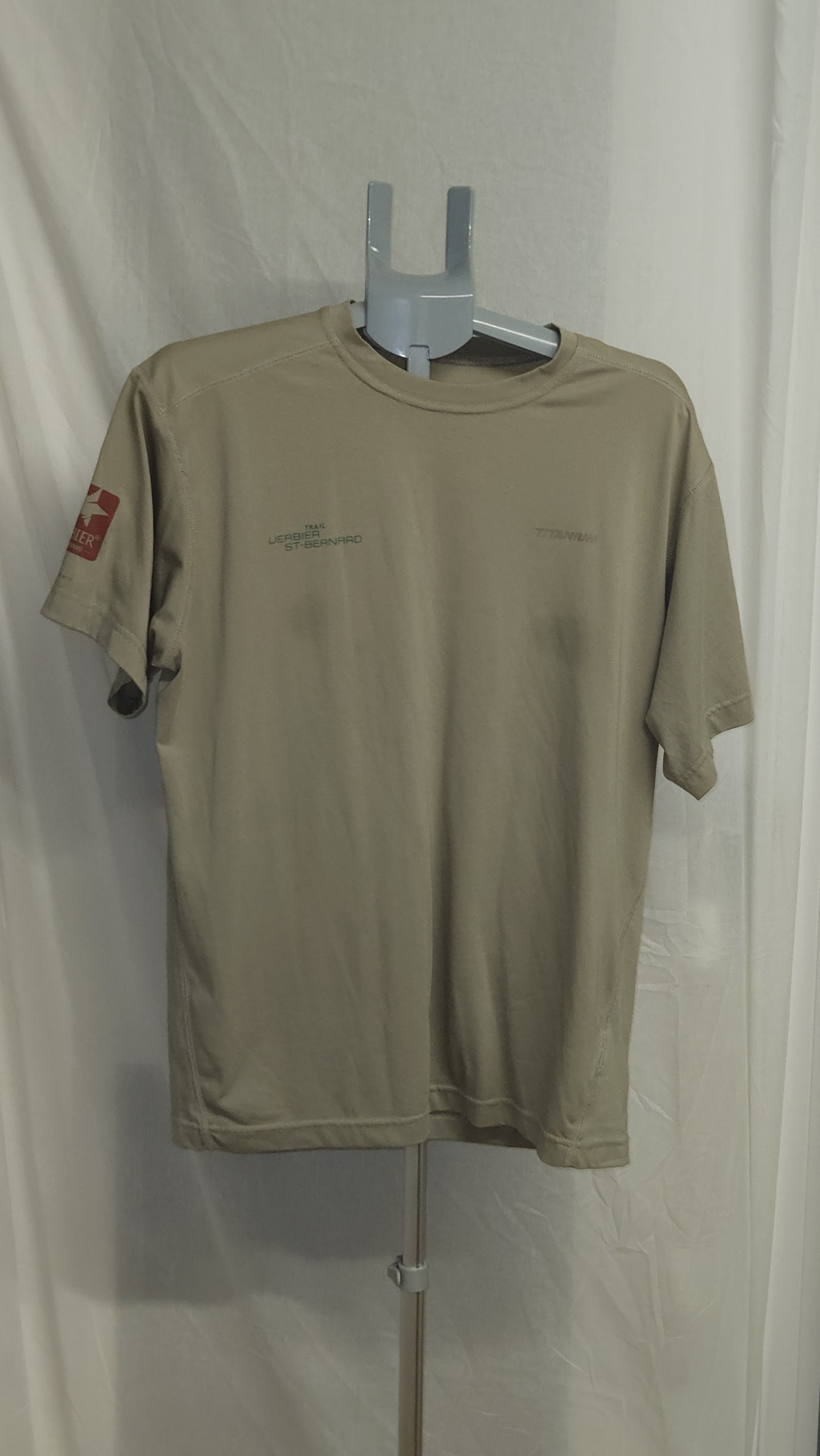 Stone Graphic Hiking T-Shirt
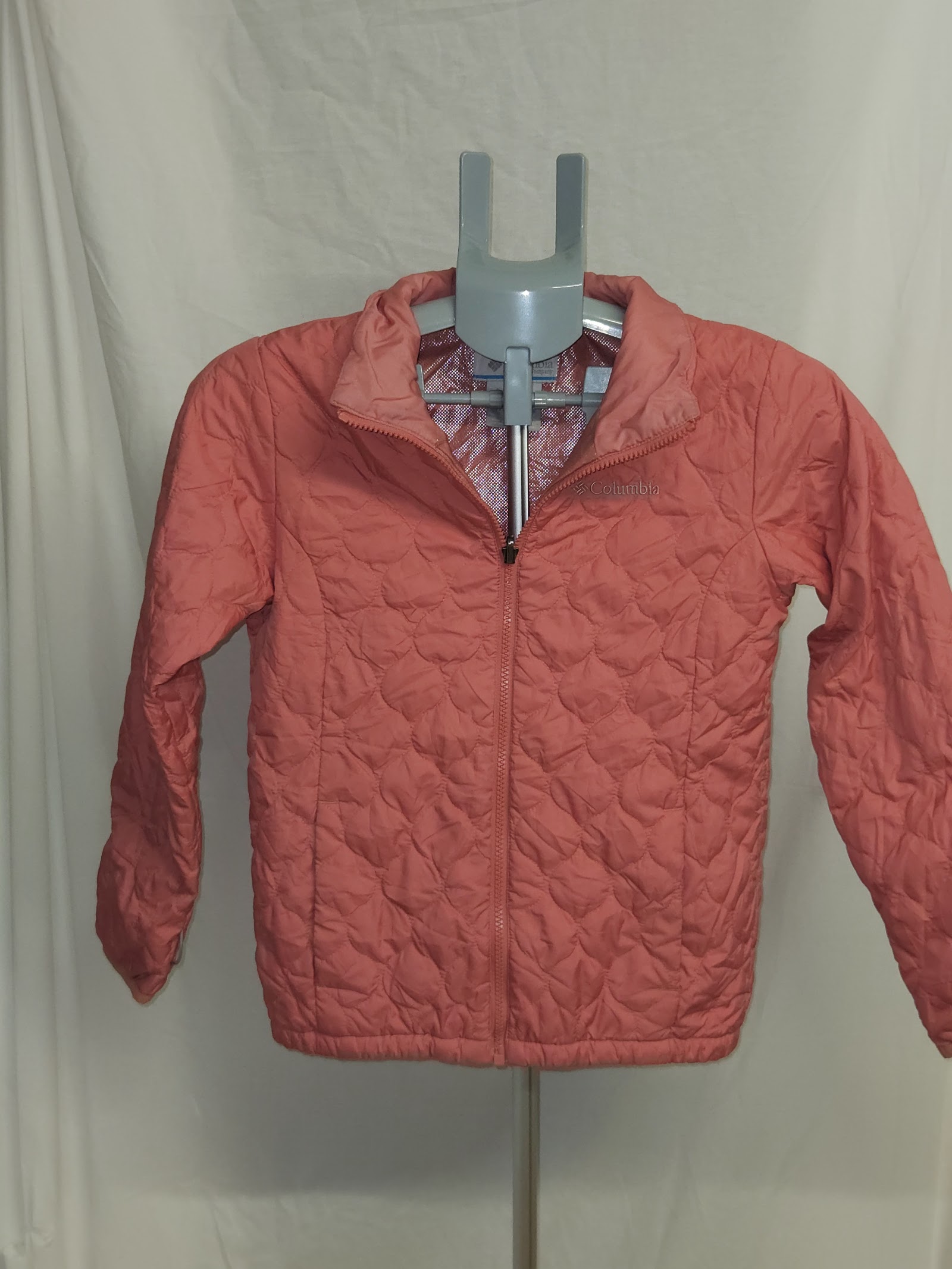 Coral Quilted Interchange Liner Jacket
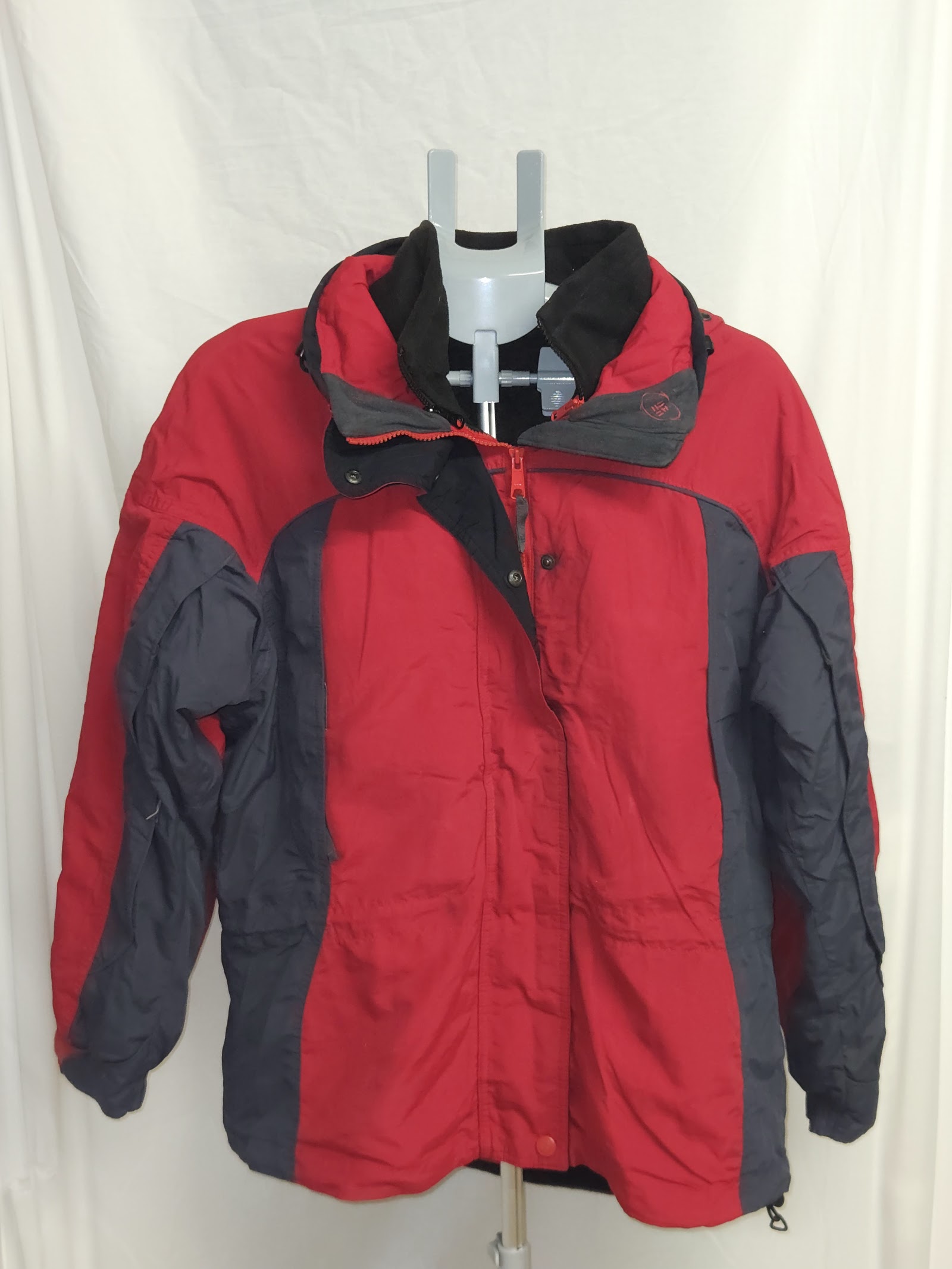 Red Charcoal Hooded Interchange Outdoor Jacket
History sources
Historical details checked against the sources linked below. Our styling views and stocking reasons are our own.
- Columbia — official UK history: 1938 origins, fishing vest, Interchange and advertising milestones
- Columbia — Our Story: the Lamfrom family’s journey and the Columbia Hat Company
- Columbia — 40 years of the three-in-one Interchange system
- Columbia Sportswear Company — Gert Boyle company announcement, 3 November 2019
- Columbia Sportswear Company — 2025 Form 10-K: founding and business description
- Columbia Sportswear Company — second-quarter release, 30 July 2026: international reach