
THE STORY BEHIND THE LABEL

Fila: from Biella knitwear to tennis colour and streetwear
How four Fila brothers began a textile business in Biella, why the White Line changed tennis style, and what makes preloved Fila useful for everyday outfits.
Biella, 1911: warm clothing before sportswear
Fila traces its beginning to 1911 in Biella, an Italian textile town at the foot of the Alps. The brand’s European history says four brothers from the Fila family made warm clothing for local people, combining good materials with practical, classically styled garments. Its official Vietnamese history describes the early operation as a workshop for knitwear and underwear.
The company sources do not give the brothers’ first names on the history pages we used, so we have not filled that gap from less reliable retellings. The documented founders are the four Fila brothers, and Biella is the documented place of origin.
Fila Europe separately says a manufacturing business was established in 1923 and initially concentrated on underwear. We treat 1911 as the origin date used by the brand and 1923 as a later formal manufacturing milestone, rather than pretending the two dates describe exactly the same event.
The White Line brings colour to tennis
The decisive move into international sportswear came in the 1970s. Fila’s European history dates the White Line collection to 1974 and credits creative director Pier Luigi Rolando. Instead of treating tennis clothing as plain white uniform, the range used colour and a more visibly designed sporting look while keeping movement and comfort in mind.
The White Line also introduced the F-box emblem that became closely associated with the label. Fila’s official history connects the range with Björn Borg, whose five consecutive Wimbledon singles titles began in 1976. Photographs of Borg in Fila helped place the brand’s colour, stripes and neat silhouettes on one of sport’s most watched stages.
This is strong evidence for historical visibility, but it is not proof that every later Fila garment is a tennis piece or collectible. The product label, construction and individual history matter more than a general connection with Borg.
From tennis courts to mountains and basketball
Fila broadened its sporting identity beyond tennis. Its European account names mountaineer Reinhold Messner among the athletes associated with the brand, while company histories also cover skiing, swimming and sailing. These links gave the logo a life in several types of sports clothing rather than tying it to one court.
In the 1990s, basketball supplied another important cultural bridge. Fila’s published history highlights signature footwear connected with Grant Hill and describes the label moving into hip-hop and street culture. Its own material also associates that period with Tupac, showing how sportswear could become part of a musician’s everyday visual identity.
Those examples document the cultural story Fila chooses to tell about itself; they are not an independent ranking of popularity. They do help explain why a logo developed through elite sport can also feel at home on a relaxed sweatshirt, hoodie or pair of joggers.
Why the style continues to work away from sport
Fila Europe describes a later move from performance clothing into fashion and streetwear, including renewed attention around chunky trainers such as the Disruptor. That revival drew on recognisable older details rather than hiding them: the F-box, red-and-navy colour combinations, sleeve taping and prominent wordmarks.
Our editorial view is that this recognisability is useful without demanding a complicated outfit. A small embroidered badge can add interest to plain joggers, while repeated sleeve branding or a contrasting chest logo makes a sweatshirt more noticeable. Softer fleece and sherpa textures offer a different way to wear the same sporting identity.
Heritage can explain the look, but it does not establish the age of an individual item. A current-style logo or a design inspired by the 1970s should not be advertised as vintage without evidence from the garment itself.
Why we stock preloved Fila
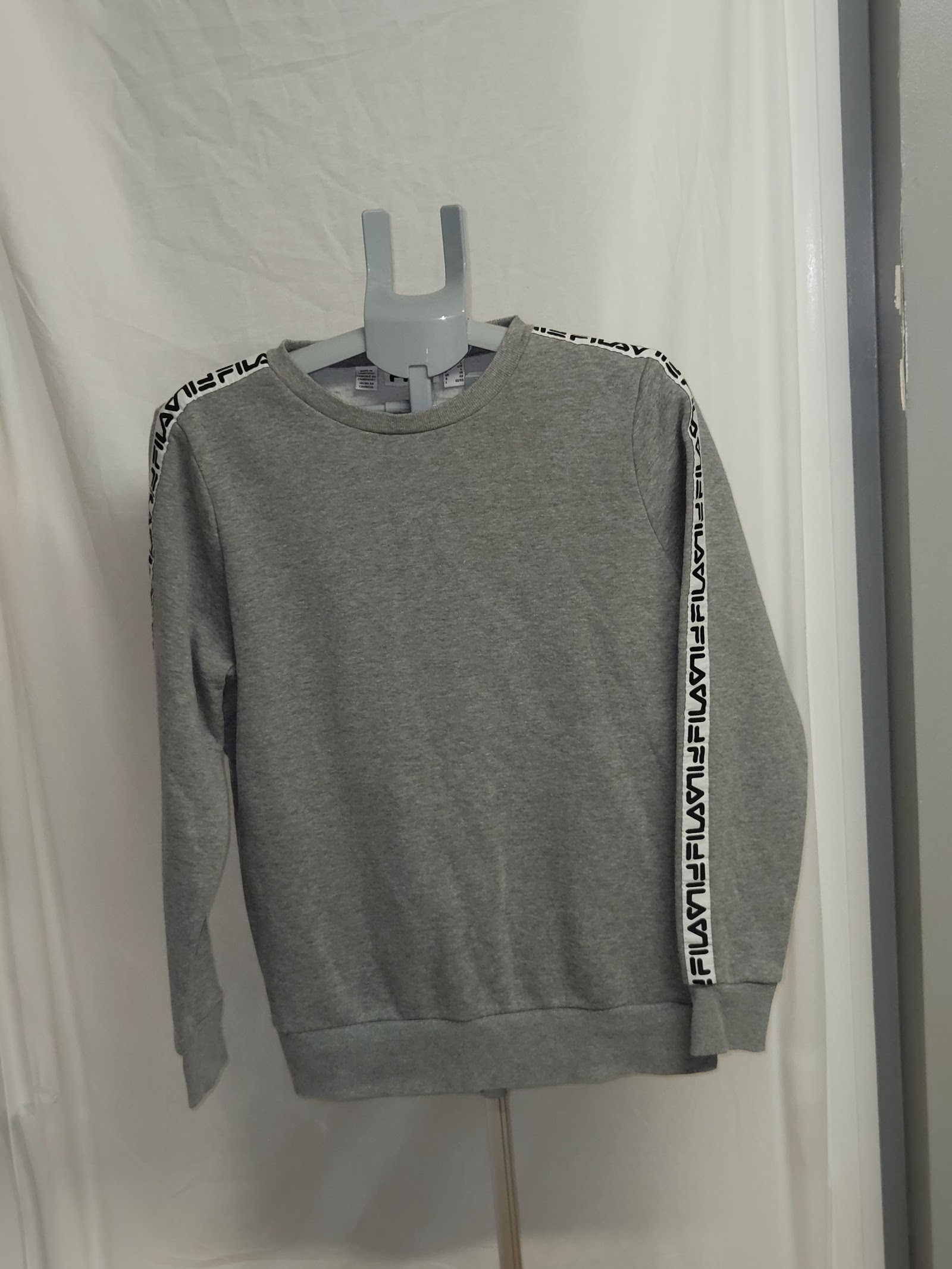
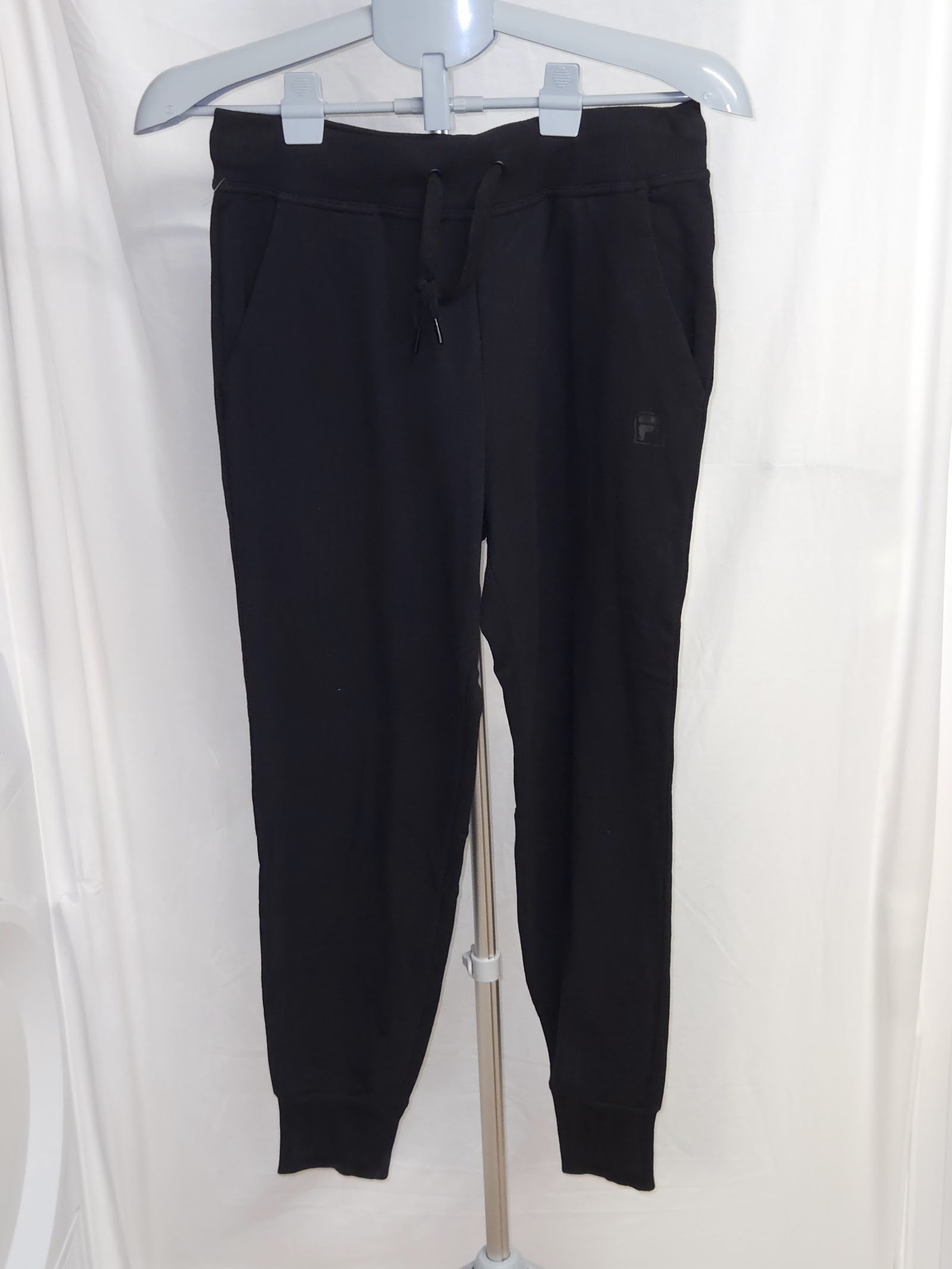
The Fila pieces we encounter include a dusty-pink sherpa hoodie, a grey crew-neck sweatshirt with repeated sleeve branding and black cuffed joggers with a small tonal logo. Together they cover three practical wardrobe roles: a warm casual layer, an everyday sweatshirt and relaxed trousers. The live shopping section below, rather than this article, determines what is currently available.
We would let the pink fleece be the main colour in an outfit with dark jeans or joggers. The grey sweatshirt can sit over a plain T-shirt, while black cuffed joggers are easy to pair with a quieter hoodie or casual jacket. These are our styling suggestions, not claims that an individual piece is designed for exercise or specialist performance.
For us, preloved value depends on the actual garment: its price, fit, recorded condition and how often it can be worn. A familiar sporting logo is not a guaranteed saving, and it is not a reason to overlook stretched ribbing, tired fleece or damaged graphics.
Check fit, texture and logo wear
Compare chest width, body length and sleeve length with a hoodie or sweatshirt that already fits well. For joggers, compare the waist, rise and inside leg where supplied. A size letter is only a starting point, particularly when the same label appears across fitted sportswear and roomier casual pieces.
Use the actual-item photographs to check fleece for flattening or bobbling, and inspect cuffs, hems and drawcord channels for wear. Look closely at printed or embroidered logos and repeated sleeve details. Read the recorded fabric and care label where available instead of assuming that every Fila piece uses the same fibre blend.
Brand history does not prove performance, manufacture date or authenticity for a particular garment. Judge the photographed item, its labels and condition notes. Ask for a missing measurement before buying and quote the BP stock code so the correct one-off piece can be checked.
Use the Fila topic link to browse the brand collection, or visit the full shop below. Product cards appear only when matching garments pass current availability and image checks, so the selection can change as individual items sell.
Explore preloved Fila
One-off clothing, actual-item photographs and individual condition details. Check each listing for current availability.
Shop preloved Fila ↗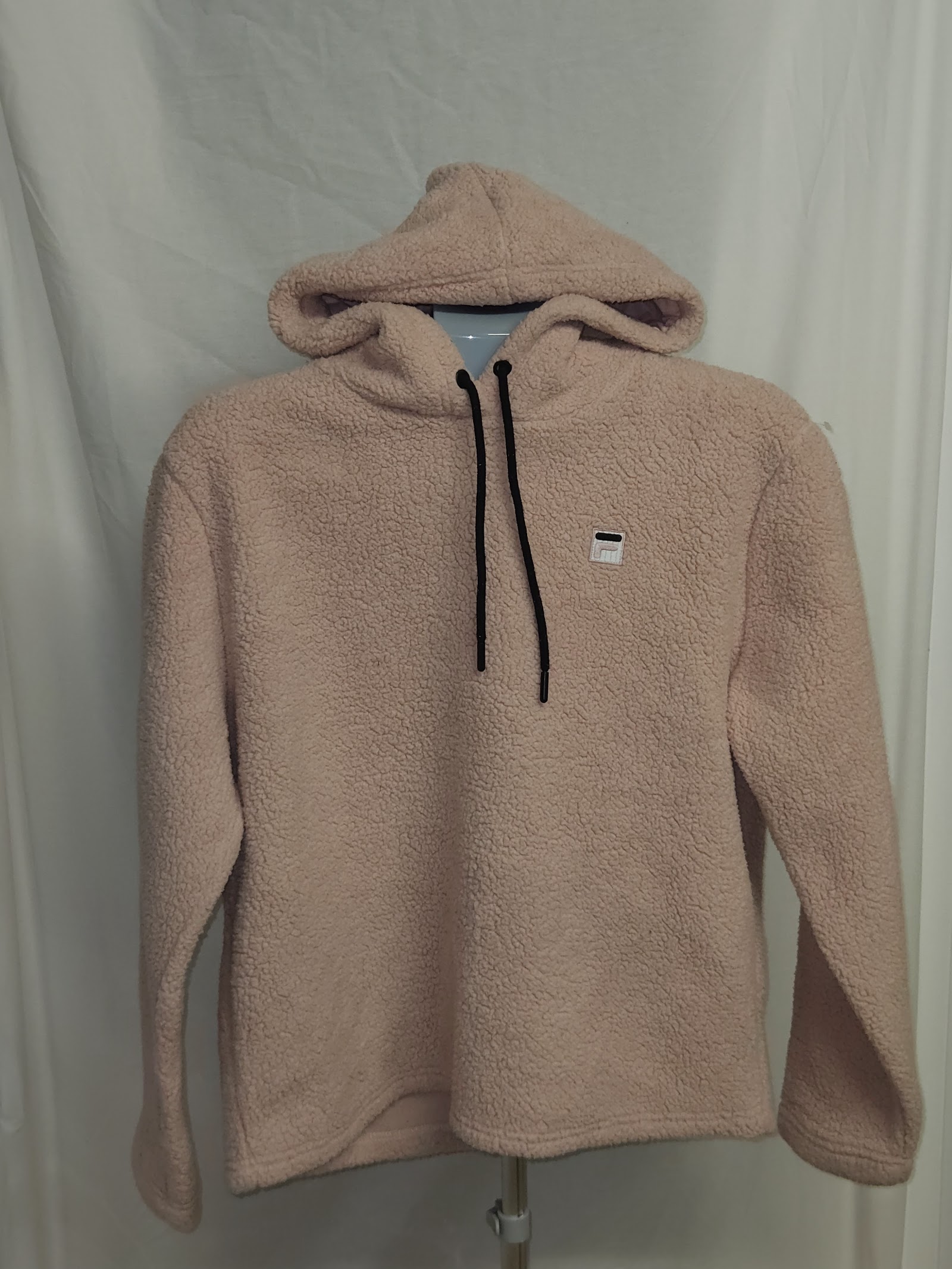 Dusty Pink Sherpa Teddy Fleece Pullover Hoodie
 Grey Logo Sleeve Crew-Neck Sweatshirt
 Black Cuffed Logo Joggers
History sources
Historical details checked against the sources linked below. Our styling views and stocking reasons are our own.
- Fila Europe — official brand history: Biella, the four brothers, White Line and sporting links
- Fila Vietnam — official history: textile origins, White Line, Björn Borg, basketball and street culture
- Fila Europe — the Ray and Fila’s route from sport into streetwear
- Fila Holdings — 2022 integrated report and company timeline