
THE STORY BEHIND THE LABEL
Hoodrich: a Birmingham streetwear story built from 30 T-shirts
How Jay Williams started Hoodrich in Birmingham in 2014, built links with UK music and retail, and why its graphic tops and joggers work in a preloved wardrobe.
Birmingham, 2014: £200 and a first run of T-shirts
Hoodrich was founded in Birmingham in 2014 by Jay Williams. The brand’s own history says Williams began with £200, produced an initial run of 30 T-shirts and sold them from the boot of his car. Its Born in Brum feature adds that he started the business from his bedroom and describes the idea behind it simply: he wanted to make something of himself.
That origin explains two elements that still appear in the brand’s identity: Birmingham is central to the story, while “From Nothing to Something” presents ambition and progress as part of the clothing’s message. The £200 and 30-shirt details come from Hoodrich’s published account; we have not treated them as independently audited figures.
Hoodrich’s timeline describes the following year as a one-person operation in which Williams designed, packed and delivered orders himself. In 2016 he took the label to its first trade exhibition, placing the early direct-selling approach in front of retailers.
From a car boot to national retail
The company records 2017 as a turning point: it relaunched its website and held a Central London event featuring MoStack, Steel Banglez and MIST. In 2018, Footasylum became its first major retail partner and stocked Hoodrich in 14 shops. The official timeline then dates its launch with JD Sports to 2019.
Those steps matter because the label moved beyond local, founder-led sales without dropping the Birmingham identity that shaped it. Hoodrich says it opened a new head office in Birmingham’s Jewellery Quarter in 2023, and its Hood Quarters feature presents the space as a base for design, content and community activity.
The brand also states that by 2023 it was available through more than 1,000 retail outlets across 24 countries. That is Hoodrich’s own measure of its reach, not an independent market-share or popularity ranking. It does, however, show how the company describes the scale of its growth less than a decade after the first T-shirts.
Why music and Birmingham culture are part of the appeal
Hoodrich did not build visibility through clothing alone. After its 2017 event, the company launched Hood Heat in 2020 as a platform for emerging UK rap, grime and drill artists, beginning with Novelist. Its timeline says Fumez The Engineer became an ambassador in 2021 and that Hoodrich sponsored the Plugged In freestyle series.
In 2022, the brand worked on a collection connected with Top Boy’s second Netflix season and launched womenswear. Its tenth-anniversary celebration returned to Birmingham in 2024, with D Double E among the performers and a short documentary looking back over the first decade. These are documented examples of Hoodrich linking clothes with UK music and screen culture; they do not prove that every garment is rare or collectible.
Our editorial view is that the connection feels coherent because the graphics, utility details and direct slogans are designed to be noticed. For someone who likes logo-led streetwear, a Hoodrich top or pair of joggers can give a simple outfit a clear focal point. Shoppers who prefer minimal clothing can still look for a smaller chest logo or a quieter colour combination.
Why we stock preloved Hoodrich
The Hoodrich pieces we encounter include crew-neck T-shirts with core, chenille, dove or reflective graphics and cuffed cargo joggers with contrast branding. That gives us useful variety within one label: a top can add a graphic layer, while joggers offer a relaxed everyday base with pockets and a more technical-looking silhouette. The live shopping section below, rather than this article, determines what is currently available.
We would wear a black logo T-shirt with straight-leg jeans and trainers, or put a lighter graphic top under an open overshirt. Cuffed cargo joggers can work with a plain sweatshirt so their pocket and leg details carry the outfit. These are our styling suggestions, not claims that an individual garment is intended for sport or specialist use.
For us, preloved value comes from the particular item: its asking price, measurements, condition and how often it is likely to be worn. A familiar logo does not guarantee value, and we do not promise a fixed saving against a new equivalent. A piece earns its place when it fits the wearer and works with clothes they already own.
Choose the garment, not only the graphic
Start with measurements. Compare the chest width and body length of a T-shirt with one that already fits well; for joggers, check the waist, rise and inside leg where recorded. The same labelled size can fit differently across styles, so ask for a missing measurement and quote the BP stock code.
Use the actual-item photographs to inspect prints, raised lettering and reflective details for cracking, lifting or missing areas. On joggers, look closely at the waistband, drawcord, pocket fastenings, knees and cuffs. Read the individual condition notes and fibre label rather than assuming every piece uses the same fabric or has the same weight.
Logos and slogans do not establish a manufacturing date or make an item vintage. We also do not infer technical performance, authenticity guarantees or provenance from the brand name alone. Judge the photographed garment and the information in its listing.
Use the Hoodrich topic link to see the brand collection, or visit the full shop below. The product photographs and links shown with this story pass current catalogue, image and availability checks, so the selection can change as one-off pieces sell.
Explore preloved Hoodrich
One-off clothing, actual-item photographs and individual condition details. Check each listing for current availability.
Shop preloved Hoodrich ↗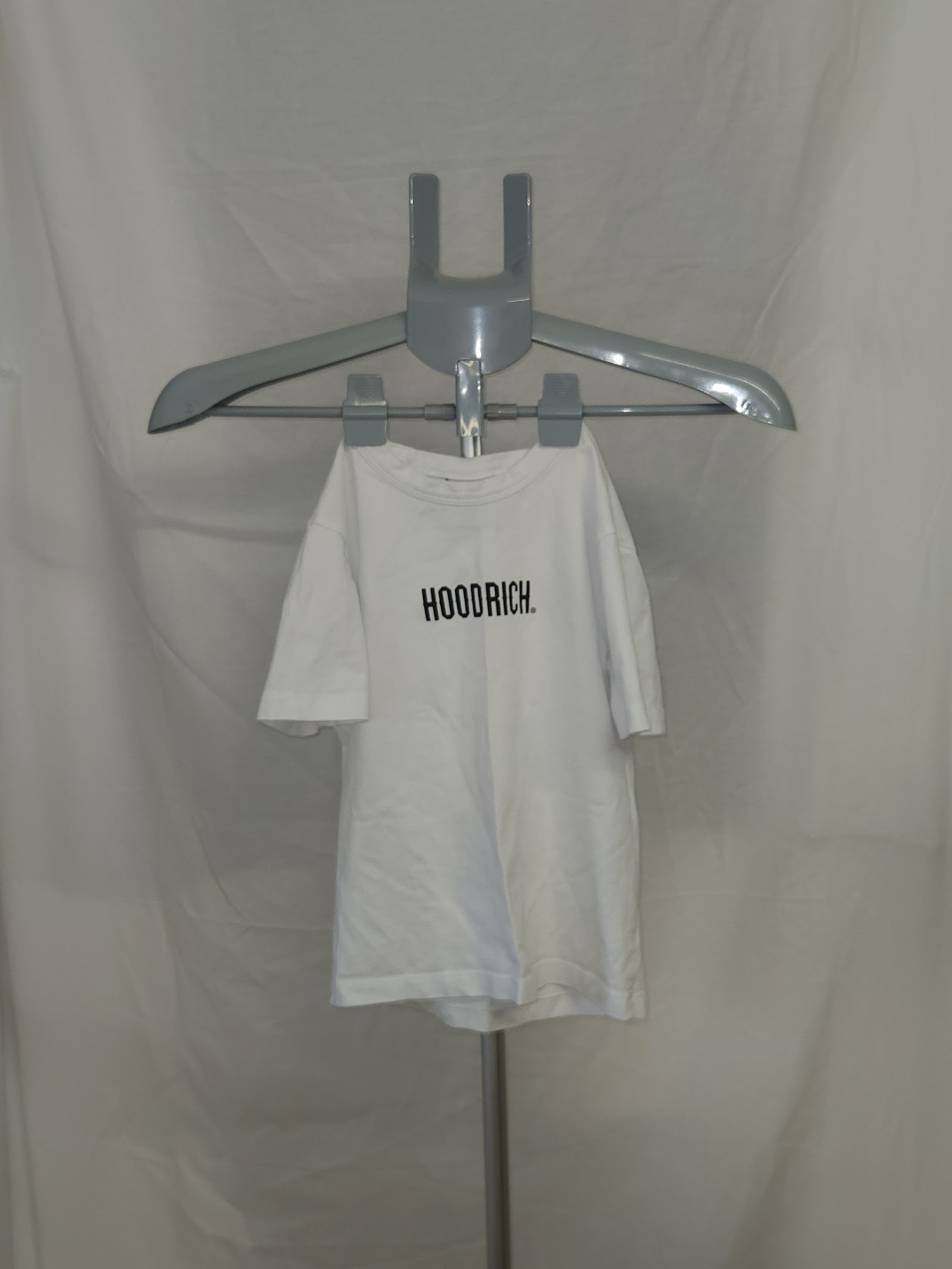 Core Logo White T-Shirt Size XS
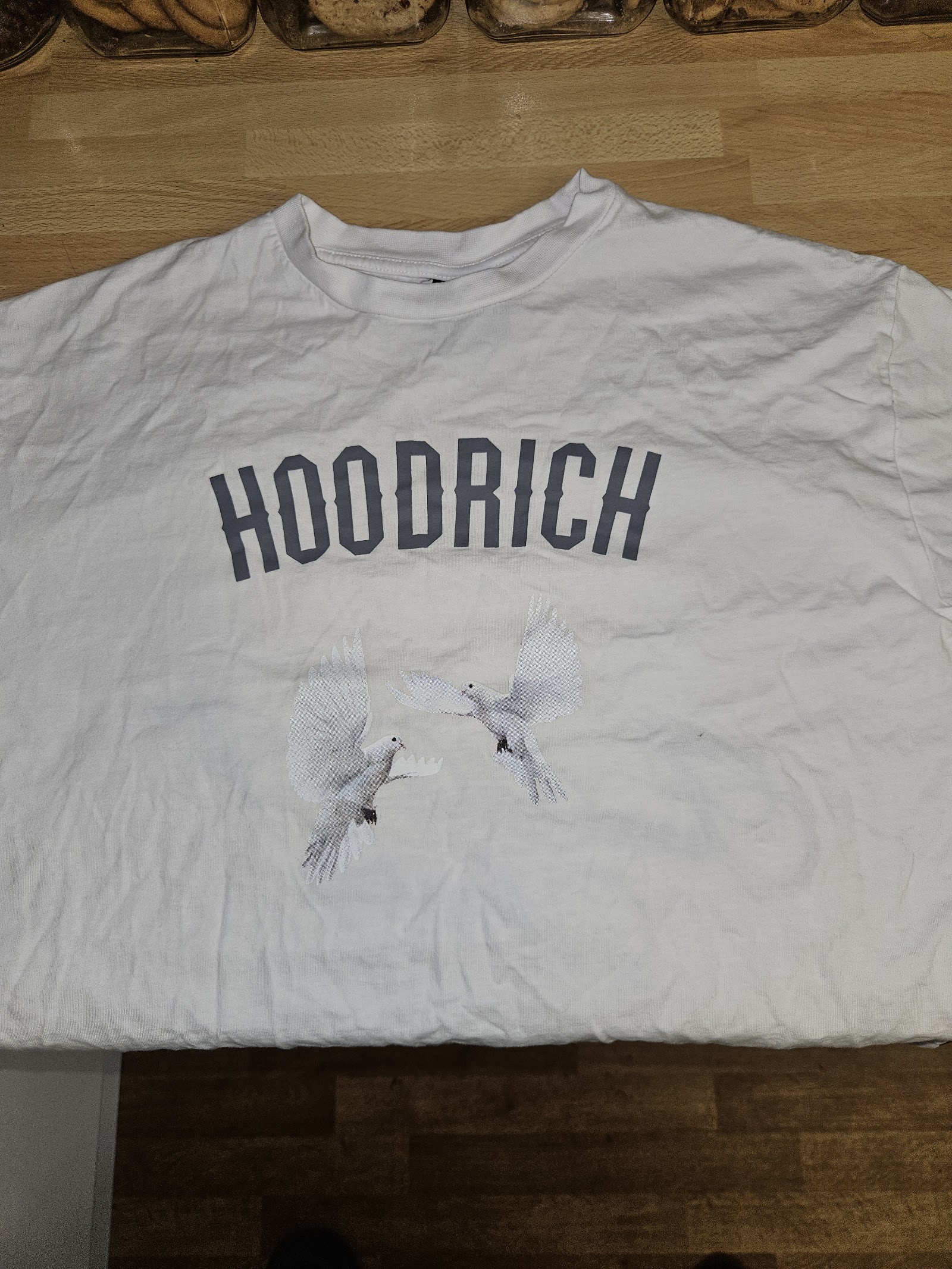 Dove Graphic White T-Shirt Size S
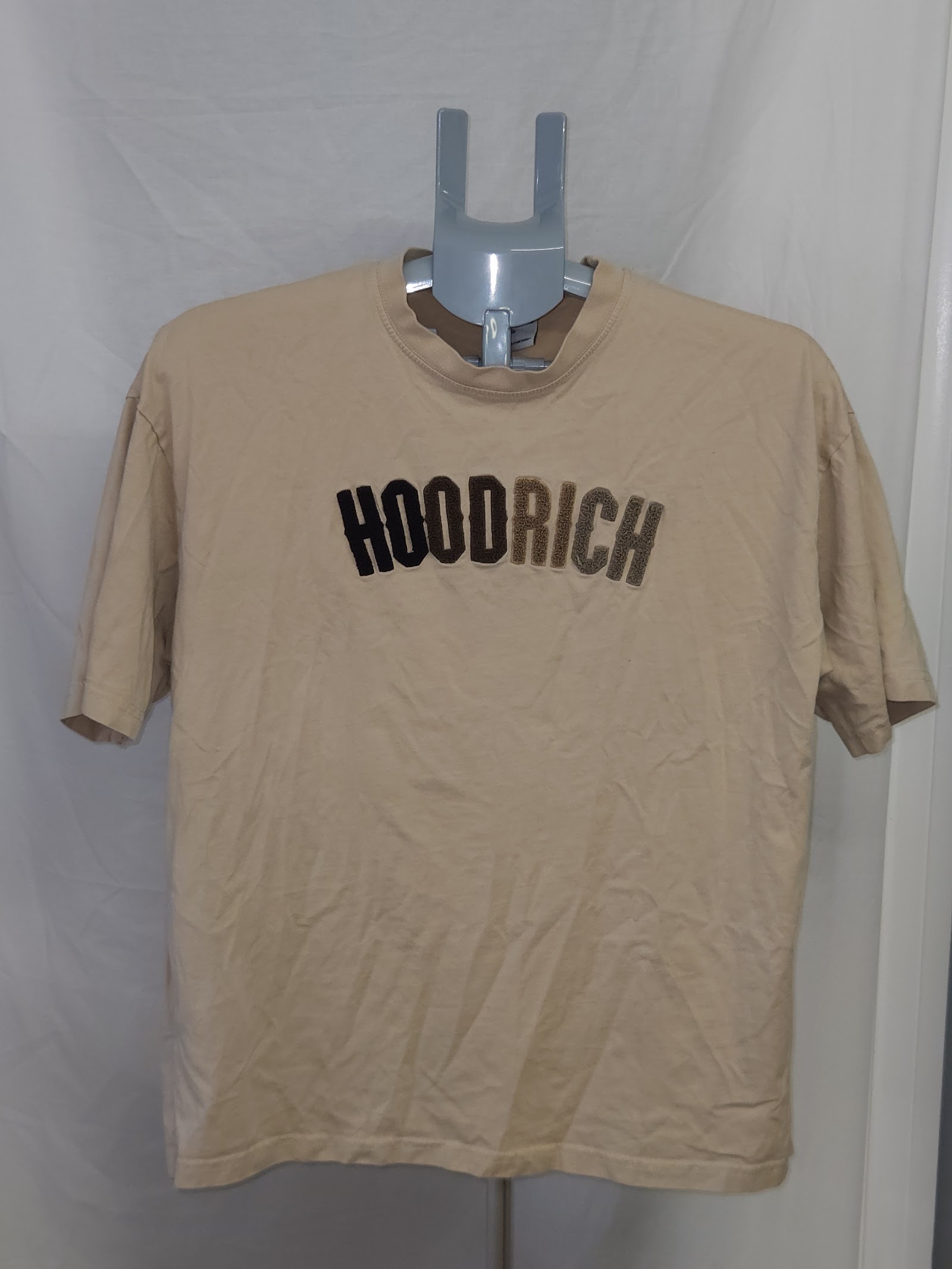 Chenille Logo Beige T-Shirt Size XS
History sources
Historical details checked against the sources linked below. Our styling views and stocking reasons are our own.