
THE STORY BEHIND THE LABEL

The North Face: from a San Francisco climbing shop to everyday outdoor style
How Doug Tompkins helped begin The North Face in 1966, why its expedition clothing crossed into everyday style, and what we value in its preloved layers.
San Francisco, 1966: a climbing shop and cultural meeting place
The North Face dates its beginning to 1966, when climber Doug Tompkins used his savings to open a small shop in San Francisco. The brand says it took its name from the north face of a mountain—the side it presents as the most challenging—and set out to equip people for exploration.
Its official timeline describes that first shop as more than a retail counter. American climbers stopped there after Yosemite trips, Beat Generation ideas circulated and the Grateful Dead played live. Outdoor equipment and the city’s counterculture therefore met at the start of the story, long before logo hoodies became everyday clothing.
A separate company remembrance calls Tompkins a co-founder and says he stepped away in 1968. The first-party pages used for this article do not identify the other founder, so we have not filled that gap from conflicting secondary summaries. Doug Tompkins is the founder the brand’s own archive consistently names.
From retailing equipment to solving outdoor problems
The early developments were practical. The North Face dates the Ruthsack to 1969 and describes it as one of the first internal-frame packs, designed to make bulky gear lighter and easier to carry. In 1975, the Oval InTENTion tent used a geodesic idea associated with architect Buckminster Fuller to replace the familiar A-frame shape with a structure intended to use material efficiently.
The clothing story became more prominent in 1977, when the company added GORE-TEX products to its outerwear range. Its archive then dates the Mountain Jacket and Pant to 1985, the Denali zip-in fleece to 1989 and the Nuptse down jacket to 1992. These are milestones in the brand’s ranges, not features that can be assumed on every garment carrying the Half Dome logo.
VF Corporation now describes The North Face’s main products as high-performance outdoor apparel, footwear, equipment and accessories. VF’s company history places its acquisition of the label in the 2000s, when The North Face became part of the wider VF portfolio.
Expeditions gave the clothing credibility
The North Face connected product development with people using equipment in demanding places. Its history records a sponsored 1972 Alaska expedition led by Ned Gillette, the 1990 Trans-Antarctica dogsled crossing and the 1994 Himalayan Suit for high-altitude climbing. It also documents athletes such as climber Alex Honnold and ski mountaineer Kit DesLauriers.
Those links provide evidence for the brand’s outdoor credibility and visibility, but they should not be transferred carelessly to a preloved hoodie or lightweight jacket. A logo alone does not establish waterproofing, insulation, expedition specification or suitability for a particular activity.
For second-hand shopping, the individual item still comes first: read its labels, inspect its construction and use the listing’s condition notes. Brand history can explain the design language, but it cannot certify technical performance after years of unknown use and care.
How mountain clothing reached streets and popular culture
The company’s own timeline says its gear crossed hemispheres and cultures to appear on trails, pavements and high mountains. It links that recognition with the Half Dome logo, whose three curved lines echo the granite landmark in Yosemite National Park.
Products such as the Denali fleece and blocky Nuptse jacket helped make technical-looking layers visually distinctive. The brand describes the 1992 Nuptse as an immediate icon, while its record of the 1990 Trans-Antarctica expedition says the team’s outerwear became a phenomenon. These are company descriptions, not independent popularity rankings, but they show how The North Face explains its cultural reach.
Our editorial view is that the attraction lies in that overlap. Dark colours, practical zips, hoods and compact logo placement work easily in ordinary outfits, while their mountaineering references give them more identity than a completely plain layer. Shoppers can enjoy that style without claiming an everyday garment is expedition equipment.
Why we stock preloved The North Face
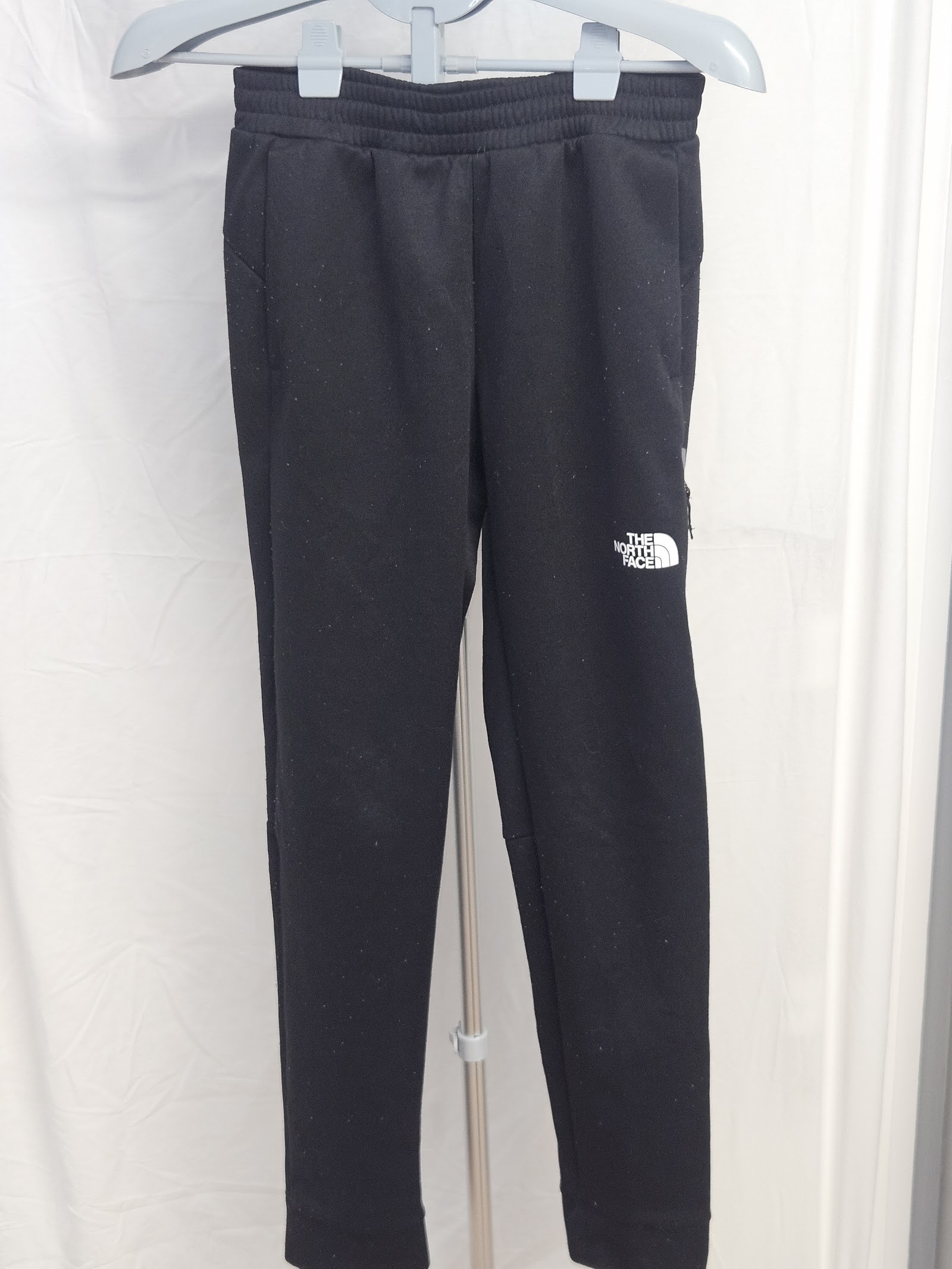
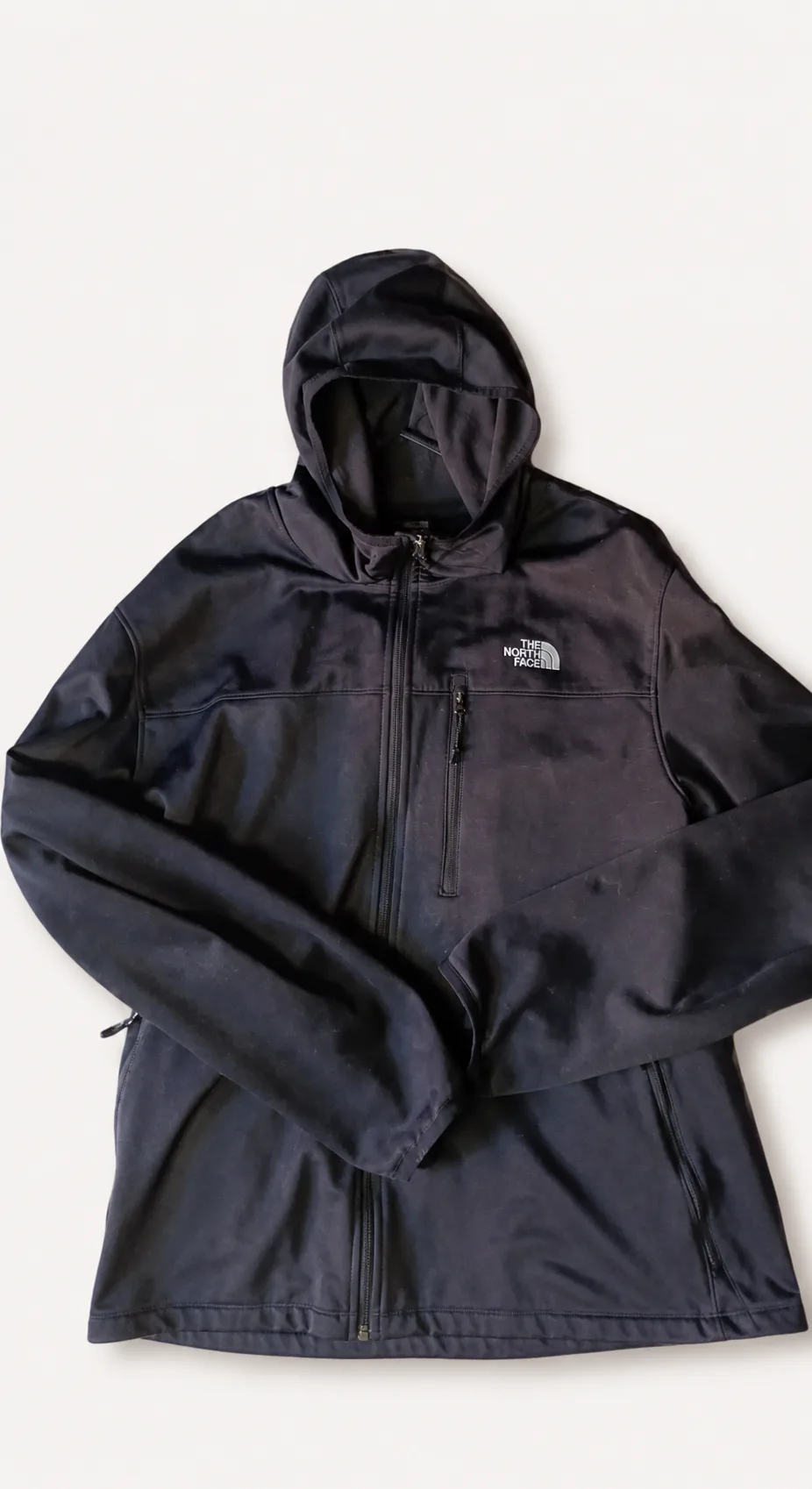
The North Face pieces we encounter include a black full-zip hooded jacket, a black logo pullover hoodie, a women’s half-zip performance-style top and black jogger leggings. Together they cover useful wardrobe roles: an outer layer, a casual sweatshirt, a lighter fitted top and relaxed trousers. The live shopping section below, rather than this article, determines what is currently available.
We would wear the hoodie with jeans for a simple everyday outfit, use the lightweight jacket over a sweatshirt when conditions suit the garment, and pair the fitted half-zip top or jogger leggings with quieter casual layers. These are styling suggestions, not promises that a particular preloved item is suitable for running, climbing or severe weather.
For us, preloved value depends on the exact garment: current price, measurements, fabric, working fastenings, visible wear and how often it can be used. A recognised outdoor badge does not guarantee a saving, condition or authenticity, and it should never replace a close look at the actual-item photographs.
Check fit, fastenings and claimed technology
Compare chest width, body length and sleeve length with a jacket, hoodie or top that already fits. For joggers or leggings, compare the waist, rise and inside leg where supplied. Allow room for the layers you intend to wear underneath rather than relying only on the size letter.
Inspect cuffs, hems, pockets, drawcords, zip teeth and the areas around printed or embroidered logos. Read any photographed technology and fibre labels instead of assuming that every The North Face garment is waterproof, breathable, insulated or made with the same material.
A used technical garment may also have changed through wear, washing or missing components. Unless the individual listing provides current, verified information, treat it as clothing rather than protective or safety equipment. Ask for a missing measurement and quote the BP stock code so the correct one-off item can be checked.
Use the brand topic link to browse The North Face collection, or visit the full shop below. Product cards appear only when matching garments pass current availability and photograph checks, so the selection can change as individual items sell.
Explore preloved The North Face
One-off clothing, actual-item photographs and individual condition details. Check each listing for current availability.
Shop preloved The North Face ↗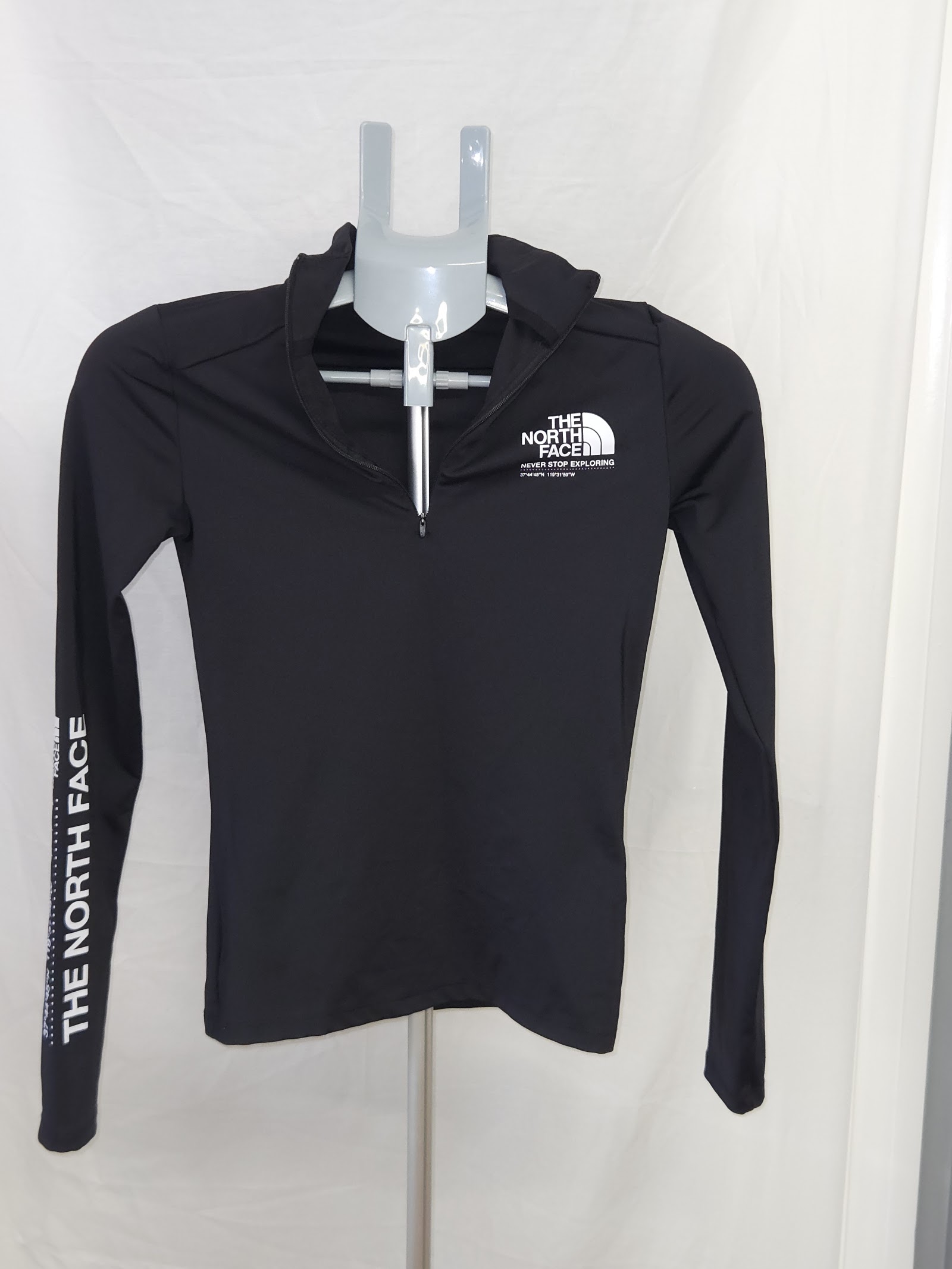 Women's Black Half Zip Performance Top Size S
 Black Women's Joggers Leggings Size S
 Black hooded full-zip jacket
History sources
Historical details checked against the sources linked below. Our styling views and stocking reasons are our own.
- The North Face — official history: 1966 San Francisco origins, early equipment, outerwear and cultural milestones
- The North Face — remembering co-founder Doug Tompkins and the practical purpose of the first catalogue
- The North Face — official US archive: Denali, Trans-Antarctica, Nuptse and later exploration milestones
- VF Corporation — The North Face brand profile: founding year and product categories
- VF Corporation — company history and acquisition of The North Face