
THE STORY BEHIND THE LABEL
Under Armour: from one performance shirt to everyday sportswear
Kevin Plank’s 1996 idea, Under Armour’s sporting and cultural growth, and why its preloved hoodies, jackets and training tops deserve a closer look.
Washington, DC, 1996: a shirt with a purpose
Under Armour was founded in 1996 by Kevin Plank, a former University of Maryland American football player. The brand’s UK history locates his first prototypes in his grandmother’s rowhouse in Georgetown, Washington, DC. The starting point was a sweat-wicking shirt, rather than a broad fashion collection.
The University of Maryland’s account gives the problem a practical context: Plank disliked repeatedly changing sweat-soaked cotton T-shirts during training. He researched synthetic fabrics, developed the first HeatGear shirt and travelled along the East Coast selling it from his car. This is the university’s published account of its alumnus, not an invented founder anecdote.
Under Armour’s history dates the move to Baltimore to 1998. That distinction is useful: Baltimore became the brand’s home, but its earliest work took place in Washington. The story began with an athlete trying to improve a familiar piece of kit.
From base layers to a wider sporting wardrobe
The corporate timeline identifies the original 1996 prototype as number 0037, nicknamed “The Shorty”. It dates the introduction of ColdGear to 1997, alongside an expanding approach to clothing for different conditions. These names describe product families; they should not be treated as interchangeable features on every Under Armour garment.
The business then grew beyond its first shirts. It went public in November 2005, introduced its first American football boots in 2006 and opened its first Brand House shop in Annapolis in 2007. In 2020, it launched Curry Brand with basketball player Stephen Curry.
Those developments explain how one performance-shirt idea became a wider sportswear identity. For preloved shopping, however, the individual item still matters more than the breadth of the brand: a casual hoodie is not automatically a compression layer, and a hooded jacket is not automatically waterproof.
How Under Armour became recognisable
Under Armour’s first national television advert, “Protect this House”, appeared in 2003 with former Maryland player Eric Ogbogu. The university also records an all-school agreement with Under Armour in 2005. Together with the later Curry Brand launch, these are documented examples of the label reaching audiences through sport, team identity and advertising.
Our editorial view is that this sporting context helps explain the appeal of the logo on ordinary clothing. A sweatshirt or training top can suggest an active, purposeful style without requiring the wearer to build an entire outfit around it. Clear colours, simple shapes and visible branding are easy to combine with other casual pieces.
These connections are evidence of cultural visibility, not proof that every Under Armour item is popular, collectible or suited to elite sport. We do not transfer an athlete’s endorsement or a campaign’s reputation to an unrelated second-hand garment.
Why we stock preloved Under Armour
Our catalogue records a red-and-black ColdGear loose-fit hoodie, a black hooded full-zip jacket and a women’s red sleeveless training top. They offer different wardrobe roles: a relaxed sweatshirt layer, an adjustable zip-front layer and a lighter sleeveless option. The live shopping section below determines which individual pieces are currently available.
We would pair the red-and-black hoodie with dark jeans or plain joggers, letting the colour carry the outfit. A black zip jacket can sit over a simple T-shirt, while the red training top can add colour beneath an open casual layer. These are our styling suggestions, not promises of warmth, weather protection or sporting performance.
For us, preloved value comes from matching price, condition and fit to something you will actually wear. Buying a recognised label makes little sense if the cut is uncomfortable or the garment needs work you do not want to do. We do not promise a fixed saving against a new equivalent.
Choose the fit before the technology name
Start by deciding how the piece should sit: close to the body, comfortably fitted or loose enough for another layer underneath. Compare chest width and length with a garment you already like; for jackets and hoodies, compare sleeve length too. The same size letter can feel very different across different cuts.
For a sleeveless top, check the armholes and neckline as well as the body width. For a hoodie, inspect the cuffs, hem, pocket openings and any drawcords. For a jacket, look closely at the zip, lining and seams. Use all the actual-item photographs, not just the main image.
Read the photographed fibre and care labels where available. A ColdGear name in a listing is useful context, but it is not a measured warmth rating. Do not infer compression, waterproofing, fabric composition or the age of a garment from the logo alone. Ask for any missing measurement or detail before buying.
Use the Under Armour topic link to browse the collection, or the full-shop link below for other clothing. Product photographs and links are shown only when matching items pass the current availability checks, so the selection can change as one-off pieces sell.
Explore preloved Under Armour
One-off clothing, actual-item photographs and individual condition details. Check each listing for current availability.
Shop preloved Under Armour ↗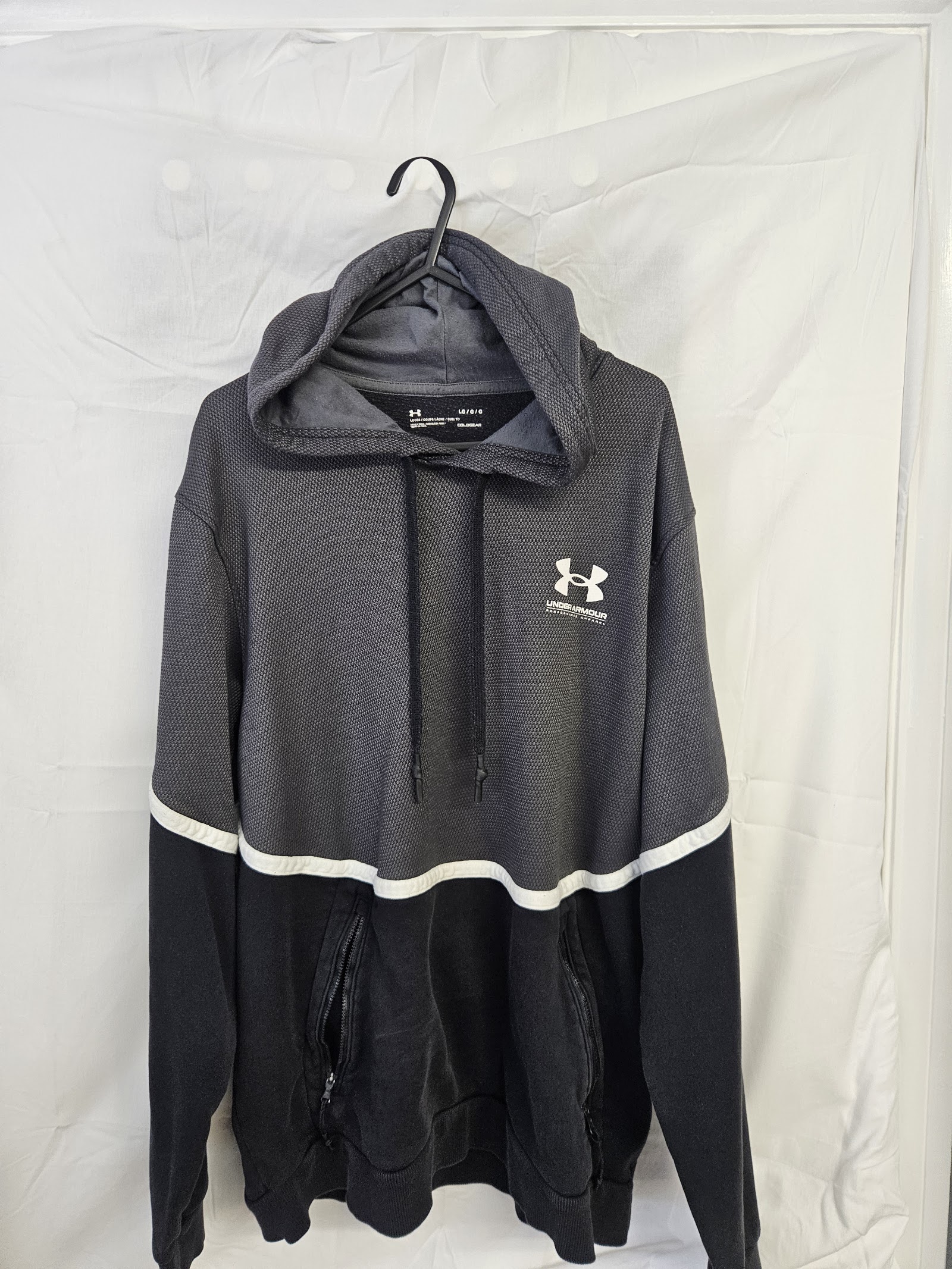 Red and black ColdGear loose-fit hoodie
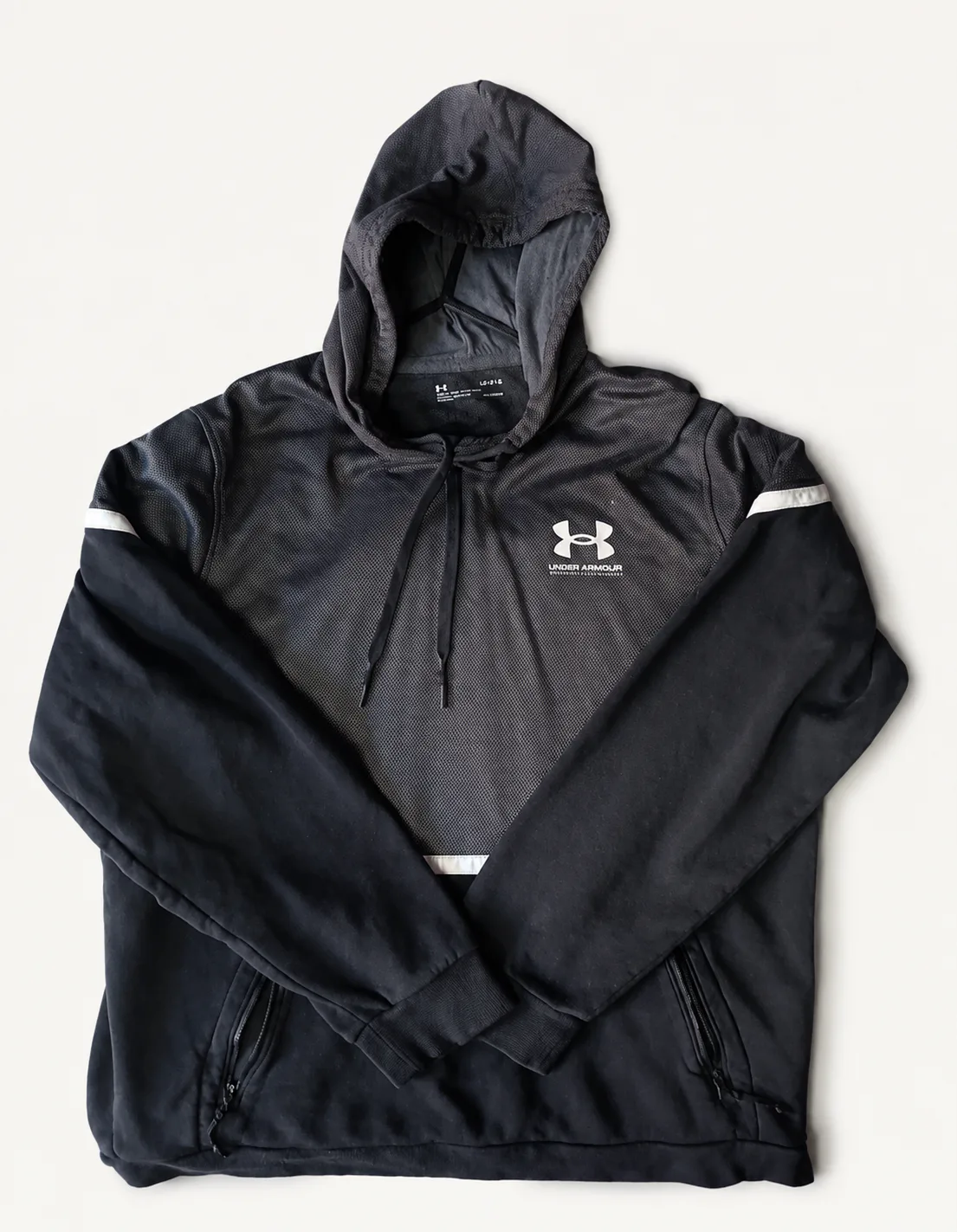 Black hooded full-zip jacket
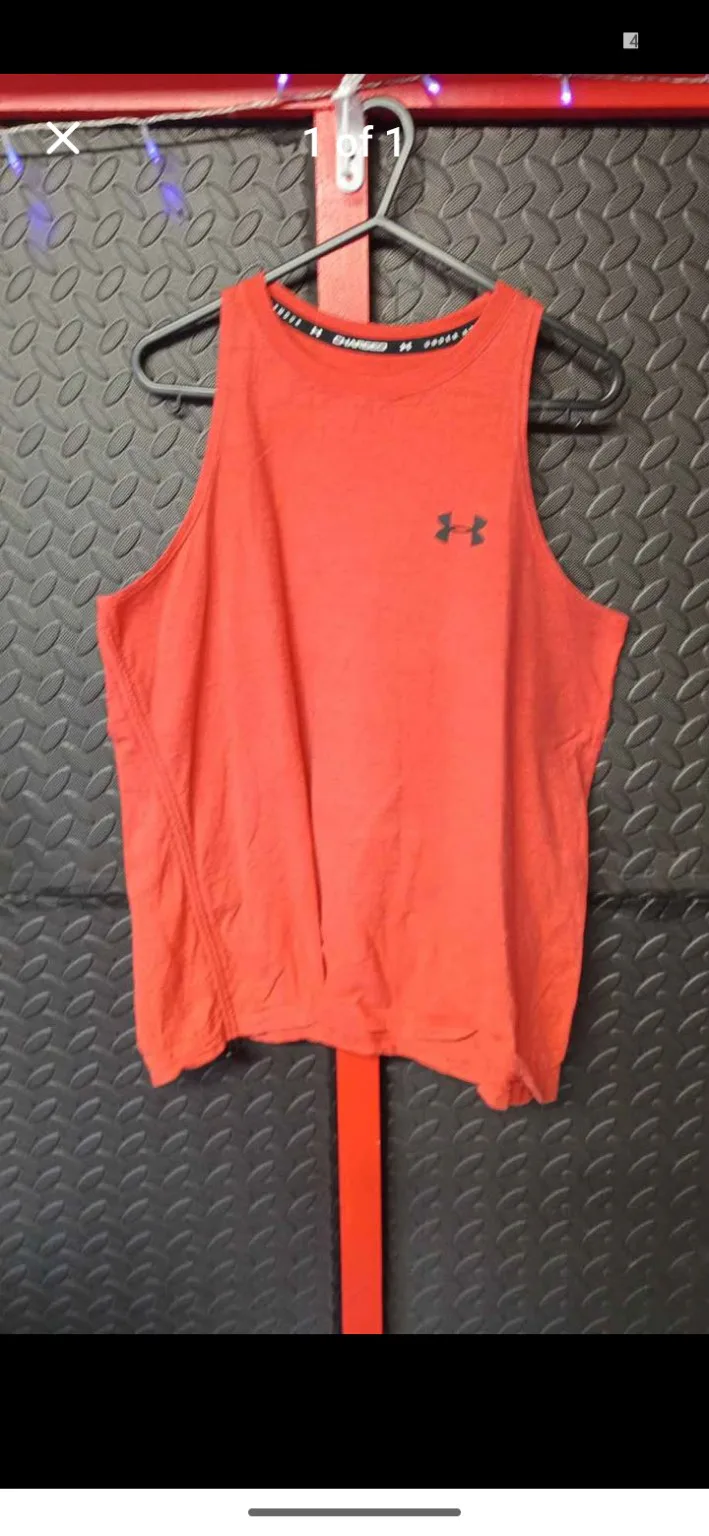 Women’s red sleeveless training top
History sources
Historical details checked against the sources linked below. Our styling views and stocking reasons are our own.
- Under Armour UK — About Us: Kevin Plank, the 1996 founding and Georgetown origins
- Under Armour — official history: early products, Baltimore move, advertising, retail and Curry Brand milestones
- University of Maryland Athletics — The UA Story: Plank’s early shirt development and the university partnership